The Bank of England has asked the public to choose which UK wildlife should appear on the next £5, £10, £20 and £50 notes
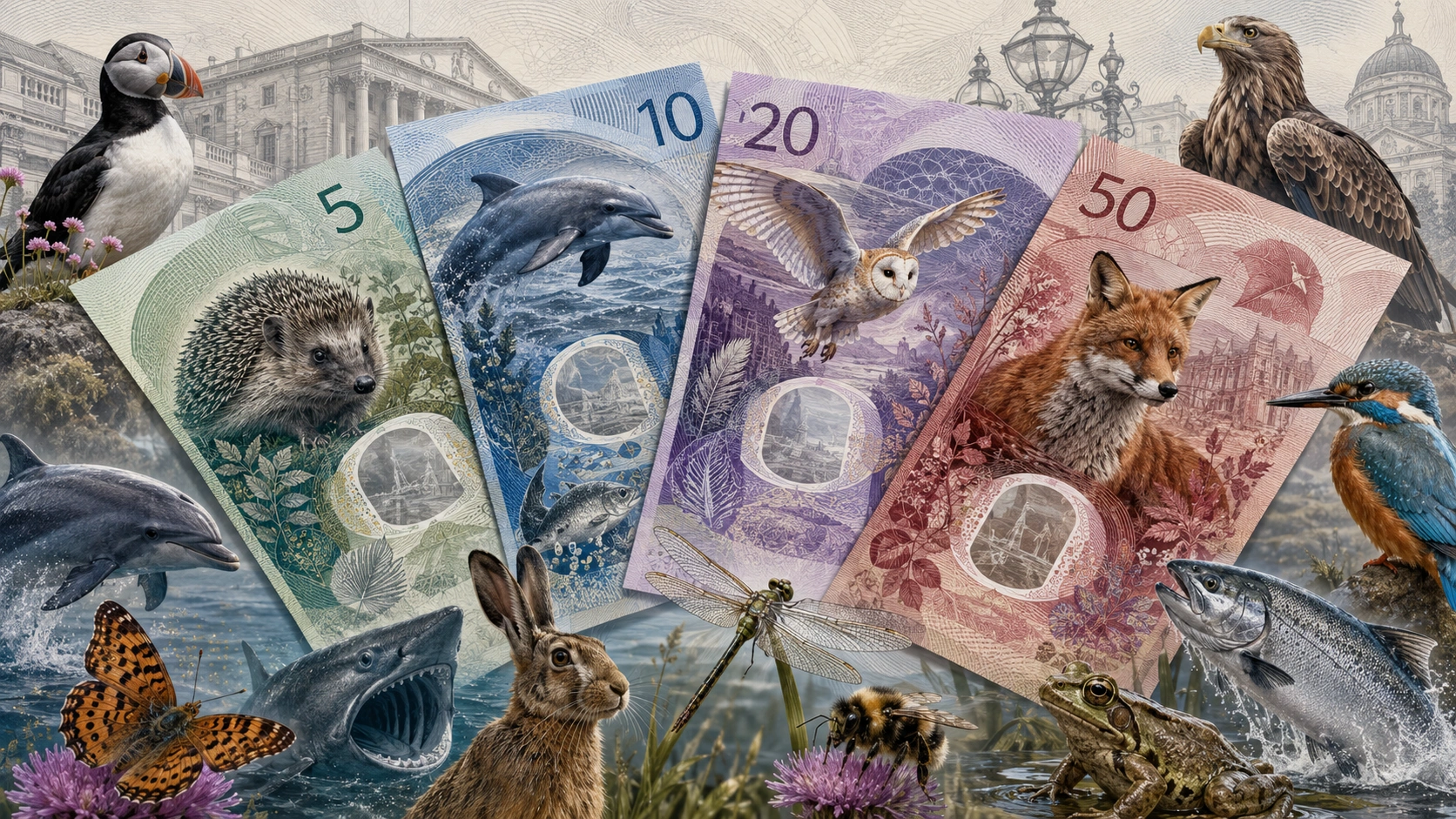
Hedgehogs, puffins, dolphins, bumblebees and basking sharks are among the animals in the running to appear on Britain’s next series of banknotes.
The Bank of England has opened a public consultation asking people to choose which native UK wildlife should be used as the central image on the new £5, £10, £20 and £50 notes.
The next designs will still include a portrait of the King, but the main imagery will move away from the historical figures used on the current series.
The existing notes feature Winston Churchill on the £5, Jane Austen on the £10, JMW Turner on the £20 and Alan Turing on the £50.
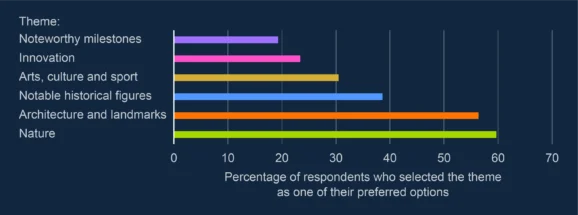
Nature, with a particular focus on wildlife, was chosen as the theme after a public consultation last year, the Bank said.
More than 44,000 people responded to that earlier consultation, with nature the most popular option. It was selected by 60 per cent of respondents as one of their preferred themes.
The Bank has now produced a shortlist of native UK animals with help from a panel of wildlife experts.
The mammals on the list are bottlenose dolphin, brown hare, European hedgehog, grey seal, pine marten and red fox.
The birds are Atlantic puffin, barn owl, common kingfisher, Eurasian curlew, great spotted woodpecker and white-tailed eagle.
And the amphibians, insects and fish category includes Atlantic salmon, basking shark, buff-tailed bumblebee, common frog, emperor dragonfly and marsh fritillary butterfly.
People can choose up to two animals from each of the three categories before 11.59pm on Friday, July 3.
Only animals on the shortlist can feature as the main images on the next series, and the Bank said it is not seeking alternative nominations.
The final decision will be made by Bank of England Governor Andrew Bailey, taking public feedback into account.
The Bank said the four denominations must remain easy to tell apart, meaning it may not simply choose the four animals with the most votes.
It said the final selection will need four distinct animals representing different environments from across the UK.
The outcome of the consultation is expected to be announced by the end of 2026.
The new notes are still several years away, with the Bank saying the design, testing and printing process will take time to ensure the notes are resilient, accessible and protected against counterfeiting.
The overall colour scheme and sizes of the notes will not change.
The Bank said cash remains important despite declining use over the past 20 years.
It said cash is still the preferred payment method for around one in seven people and is used by many more.
The value of cash in circulation reached £91.5bn at the end of February 2026.
The Bank said new security features are needed to ensure people can continue using banknotes with confidence.
It also said animal images could help make the notes easier for the public to recognise and authenticate.
The Bank said: “Animals are vital to our landscapes, ecosystems and everyday lives. They have long inspired iconic works of art, music and literature, and we are excited to showcase them on our next series of banknotes.”
The wildlife expert panel includes wildlife filmmaker Gordon Buchanan, wildlife presenter Miranda Krestovnikoff, wildlife presenter Nadeem Perera, Katy Bell of Ulster Wildlife, Steve Ormerod of Cardiff University and Dawn Scott of Nottingham Trent University.
The Bank said representation of the Home Nations will also be an important feature in the final designs.
UK wildlife banknote shortlist – what species are on the list?
Mammals
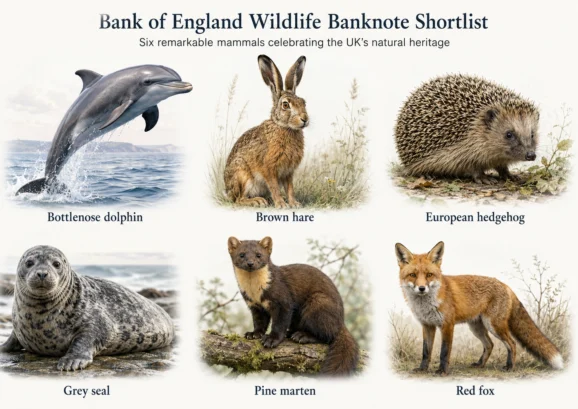
Bottlenose dolphin – A highly intelligent marine mammal found around parts of the UK coast, especially in areas such as Cardigan Bay, the Moray Firth and Cornwall. Known for social behaviour, curved dorsal fins and acrobatic leaps.
Brown hare – A fast-running farmland mammal with long ears and powerful back legs. Strongly associated with open fields and springtime courtship “boxing”.
European hedgehog – One of Britain’s best-loved garden mammals, known for its spines and nocturnal habits. Often seen as a symbol of suburban wildlife and declining garden habitats.
Grey seal – One of the UK’s most recognisable coastal mammals. Britain is home to a significant proportion of the world’s grey seal population, with colonies around Scotland, Wales, Norfolk and the Farne Islands.
Pine marten – A shy woodland predator once heavily persecuted in Britain. It has made a comeback in parts of Scotland and has been reintroduced or supported in parts of England and Wales.
Red fox – A highly adaptable mammal found in both countryside and cities. Instantly recognisable by its red coat, pointed ears and bushy tail.
Birds
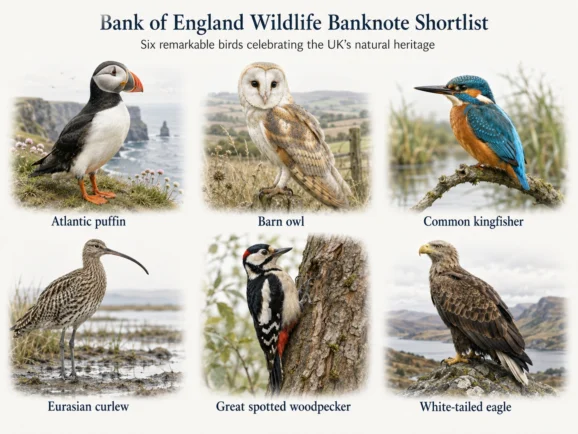
Atlantic puffin – A small seabird with a colourful bill during the breeding season. Often called a “sea parrot”, it nests in burrows on cliffs and islands around the UK.
Barn owl – A pale, silent-flying owl associated with farmland, barns and rough grassland. Its heart-shaped face and ghostly appearance make it one of Britain’s most distinctive birds.
Common kingfisher – A bright blue-and-orange bird usually seen flashing low over rivers and streams. It feeds on small fish and nests in riverbank tunnels.
Eurasian curlew – A large wading bird with a long, curved bill and haunting call. Found on moorland, wetlands and coasts, and strongly associated with wild British landscapes.
Great spotted woodpecker – A black, white and red woodland bird known for drumming on trees. It uses its strong bill to find insects and excavate nest holes.
White-tailed eagle – The UK’s largest bird of prey, sometimes called the sea eagle. Reintroduced in parts of Scotland and England after being driven to extinction in Britain.
Amphibians, insects and fish
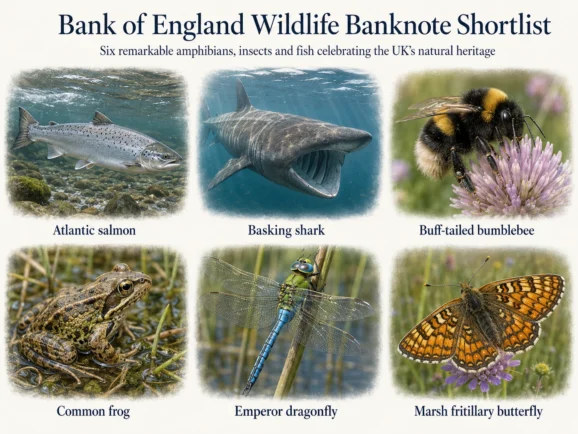
Atlantic salmon – A powerful migratory fish that hatches in rivers, grows at sea and returns upstream to spawn. Long associated with clean rivers and wild upland landscapes.
Basking shark – The second-largest fish in the world and a seasonal visitor to UK waters. Despite its size, it feeds mainly by filtering tiny plankton from the sea.
Buff-tailed bumblebee – A common and important pollinator with a buff-coloured tail. Often seen in gardens, parks and farmland, helping pollinate wildflowers and crops.
Common frog – A familiar amphibian found in ponds, gardens and wetlands. Known for spring frogspawn and as an indicator of healthy freshwater habitats.
Emperor dragonfly – One of the UK’s largest dragonflies, often seen patrolling ponds, lakes and slow-moving water. Males are bright blue with a green thorax.
Marsh fritillary butterfly – A striking orange, cream and brown butterfly linked to damp grassland and traditional grazing. Often used as a symbol of threatened meadow habitats.
READ MORE: Germany opens door to Indian startups with Berlin launch. Berlin is being pitched as a gateway for Indian firms looking to crack Germany and the wider European market as both sides push for closer business and innovation ties.
Do you have news to share or expertise to contribute? The European welcomes insights from business leaders and sector specialists. Get in touch with our editorial team to find out more.
Images: Belters News/The European