
The race for autonomous vehicles

John E. Kaye
- Published
- Home, Technology
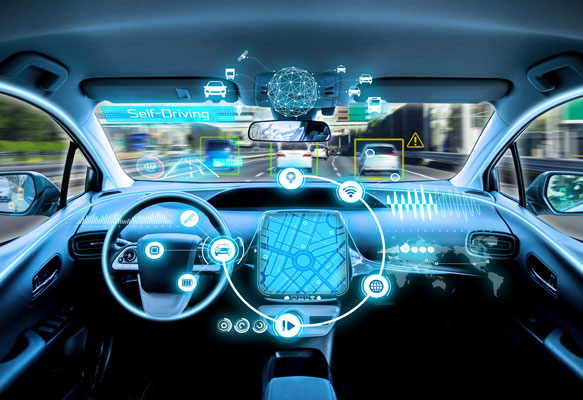
Autonomous vehicles, commonly known as self-driving cars, are now a reality. They are being used for commercial purposes. The term “pilot phase” is still being used, but millions of successful miles have been logged by autonomous vehicles.
The fundamental business model of the autonomous vehicle industry is that the automakers’ partner with tech companies and financing for the project is done by investment banks/companies.
Fiat Chrysler Automobiles, USA has partnered with Waymo, a subsidiary of Alphabet Inc (parent company of Google). Chrysler manufactures its minivans in partnership with Waymo. Waymo uses Chrysler’s minivans to serve customers of Walmart, rent-a-car companies, car maintenance companies etc. For example, customers of Walmart (selected cities in Arizona) place their orders online. Waymo’s self-driving cars transport the customer to the Walmart store to pick-up their grocery and drop them back at their homes. Walmart is planning to extend this service to other cities and states.
Waymo states on its website that “9 million miles have been self-driven” by using its tech and that “25,000 autonomous miles are logged each day” by its autonomous vehicle fleet.
General Motors created a separate division, GM Cruise, to develop autonomous vehicles. Its operations hit a snag. SoftBank of Japan came to the rescue and is now financing the project.
In a recent development in the autonomous vehicle industry, Reuters reported on 4 October 2018,
“Toyota Motor Corp and SoftBank Group Corp said they will team up to develop car services that rely on self-driving technology, such as hospital shuttles, as they envision a future in which fewer people drive their own vehicles”.
This joint venture will start with Japanese yen 2 billion (US $17.5 million). SoftBank will be the majority owner of this venture. The project has been named “MONET”.
Commenting on this joint venture, Junichi Miyakawa, Chief Technology Officer at SoftBank Corp (who will be the CEO of the new company) said,
“SoftBank alone and automakers alone can’t do everything. We want to work to help people with limited access to transportation.”
Toyota President Akio Toyoda said,
“We are trying to take the traditional car making into new fields. We realized that Softbank shares the same vision when it comes to the future of cars, so it’s time that we partner together.”
It is pertinent to mention here that SoftBank has its own autonomous vehicle unit, SB Drive, which has been developing self-driving technology for buses.
MONET is aimed for commercial use like meal deliveries, shuttle buses as well as vehicles that offer onboard medical examinations. Toyota has been developing a service called “e-Palette” based on this concept. Amazon.com Inc, Didi, Uber and Pizza Hut are early partners in the project.
With Project MONET, Toyota plans to use the “e-Palette” service to ship athletes and guests during the 2020 Tokyo Olympics.
In another development related to a Japanese automaker, Honda Motor Co Ltd is willing to invest US $2.75 billion and take a 5.7 percent stake in General Motors Co’s “Cruise” self-driving vehicle unit. As mentioned earlier, SoftBank has also invested in “Cruise”.
This shows that the Japanese are ramping up the competition in the autonomous vehicle industry. American dominance is being challenged by Japanese investment conglomerates and auto manufacturers.
The future of autonomous vehicles
The future is bright for the autonomous vehicle industry. The partnerships between self-driving vehicle manufacturers and goods/service providers are gaining traction. Ridesharing services, big retailers, emergency service providers are the major beneficiaries.
For ridesharing services, self-driving vehicles are a revolution. Users can request a ride and type their destination on their App while computer systems of ridesharing company work at the back-end to search for other riders who can also be served on that route. The car fleet sizes will decrease and the customer base will increase. It will take time for reaching the optimal revenue mix, but it is not a dream anymore.
Emergency service providers will be able to focus on hiring emergency service personnel rather than stretching their resources to maintain a large team of drivers.
There are many commercial use cases of autonomous vehicles. However, individual car buyers might have to wait till year 2020 for clarity on road safety regulations.
TOP STORIES
-
 Deepfakes and identity fraud drive new wave of post-hire background checks
 -
Brits trust AI with their health but not their money
-
Robot sales rocket 24% as 250,000 machines snap up jobs in warehouses, hotels and hospitals
-
Nearshore supply chains: why Costa Rica is emerging as a strategic gateway for global manufacturing and innovation
-
Bank of England governor warns AI poses growing ‘increasingly significant’ threat to financial stability
-
Inside Cartago’s US$1.186bn green investment hub
-
Smart manufacturing: why Costa Rica is quietly positioning itself as Latin America’s next industrial innovation hub
-
Giant wind turbine with 252-metre rotor could mean fewer machines and cheaper offshore power
-
Talent and workforce development: how Costa Rica is building a competitive knowledge economy
-
Your biggest rival could be your best technology partner, research finds
-
China unveils giant crane capable of lifting 9,300 family cars
-
LED lights could be ‘the new asbestos’, UCL scientists warn
-
OpenAI admits AI models hid mistakes, invented data and acted without permission
-
AI arms race could mean fewer cold emails reaching your inbox
-
Costa Rica is writing the next chapter of global MedTech
-
SpaceX to launch one-tonne orbital factory for European space firm in 2028
-
The Costa Rica Report 2026 is out now
-
Europe’s healthcare sector lags on AI uptake – but leads once it starts using it
-
Stranded drivers could soon call for help even with no mobile signal
-
NASA backs space ‘air brake’ that could cut years off missions to Uranus and Neptune
-
MPs and peers call for UK ban on AI that could evade human control
-
Bioweapons research, Russian-linked spies, guided rockets and cyber-attacks on Europe used Claude AI, Anthropic reveals
-
European network alliance doubles in size as digital sovereignty drive accelerates
-
European insurance giants join New York summit on future of AI
-
Oxford leads £10m international study as resistance threatens new TB treatments








TOP STORIES
-
Deepfakes and identity fraud drive new wave of post-hire background checks
-
Brits trust AI with their health but not their money
-
Robot sales rocket 24% as 250,000 machines snap up jobs in warehouses, hotels and hospitals
-
Nearshore supply chains: why Costa Rica is emerging as a strategic gateway for global manufacturing and innovation
-
Bank of England governor warns AI poses growing ‘increasingly significant’ threat to financial stability
-
Inside Cartago’s US$1.186bn green investment hub
-
Smart manufacturing: why Costa Rica is quietly positioning itself as Latin America’s next industrial innovation hub
-
Giant wind turbine with 252-metre rotor could mean fewer machines and cheaper offshore power
-
Talent and workforce development: how Costa Rica is building a competitive knowledge economy
-
Your biggest rival could be your best technology partner, research finds
-
China unveils giant crane capable of lifting 9,300 family cars
-
LED lights could be ‘the new asbestos’, UCL scientists warn
-
OpenAI admits AI models hid mistakes, invented data and acted without permission
-
AI arms race could mean fewer cold emails reaching your inbox
-
Costa Rica is writing the next chapter of global MedTech
-
SpaceX to launch one-tonne orbital factory for European space firm in 2028
-
The Costa Rica Report 2026 is out now
-
Europe’s healthcare sector lags on AI uptake – but leads once it starts using it
-
Stranded drivers could soon call for help even with no mobile signal
-
NASA backs space ‘air brake’ that could cut years off missions to Uranus and Neptune
-
MPs and peers call for UK ban on AI that could evade human control
-
Bioweapons research, Russian-linked spies, guided rockets and cyber-attacks on Europe used Claude AI, Anthropic reveals
-
European network alliance doubles in size as digital sovereignty drive accelerates
-
European insurance giants join New York summit on future of AI
-
Oxford leads £10m international study as resistance threatens new TB treatments



