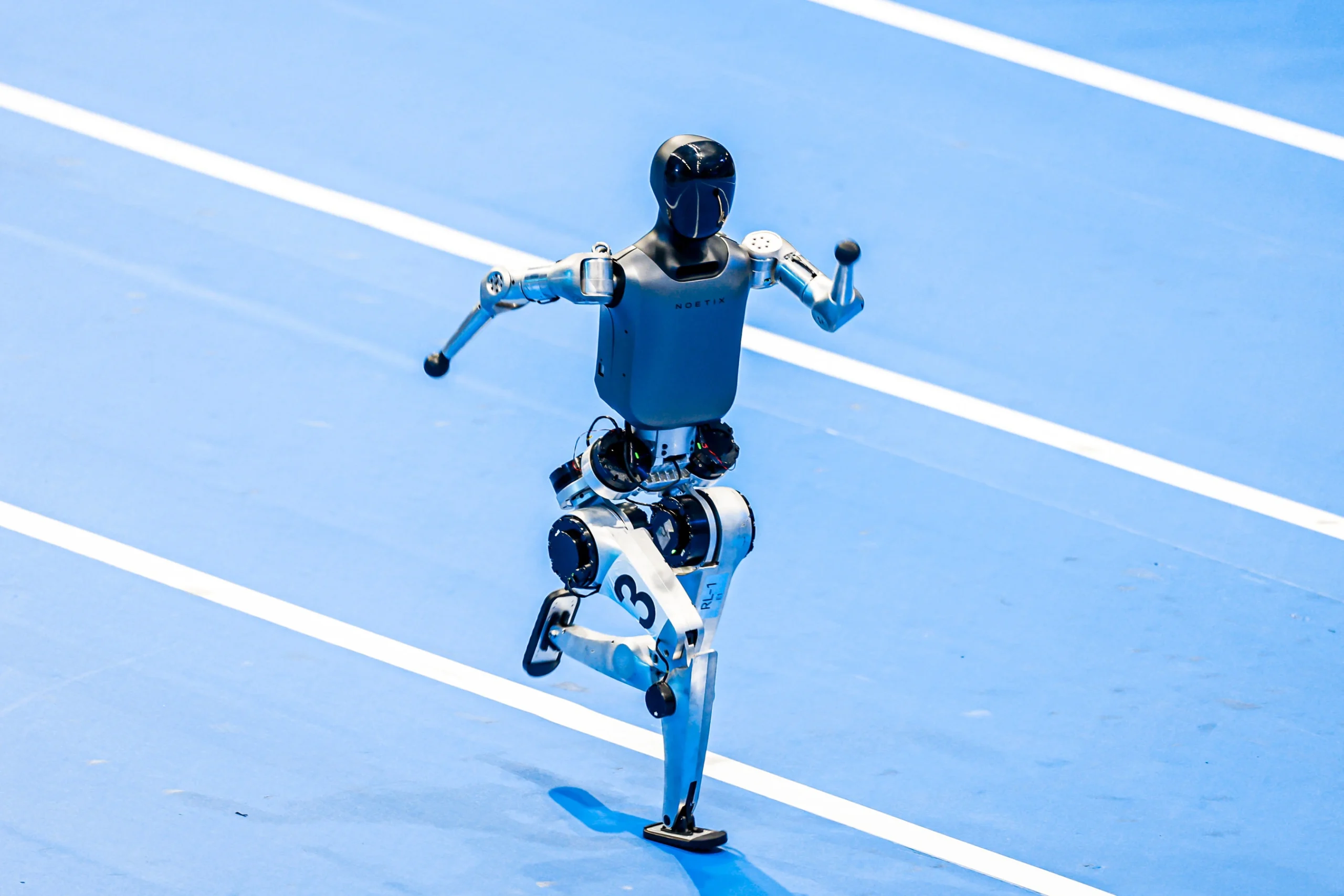
Hundreds of robots from 16 countries lined up in Beijing for the first World Humanoid Robotics Games, a three-day contest that mixed athletics, dance and football with the launch of a new global federation
Beijing has staged the world’s first comprehensive sports event for humanoid robots, drawing 280 teams from 16 countries to compete in sprint races, gymnastics, football and dance.
The three-day World Humanoid Robotics Games, held at the city’s Ice Ribbon arena from 14 August, featured 487 contests across 26 events.
The programme ranged from 100-metre sprints and hurdles to high jump, floor exercise and long-distance races, alongside exhibition matches and scenario events that tested robots in simulated workplaces.
In one of the most talked-about contests, a humanoid built in Beijing cleared 1.25 metres to win the standing long jump.
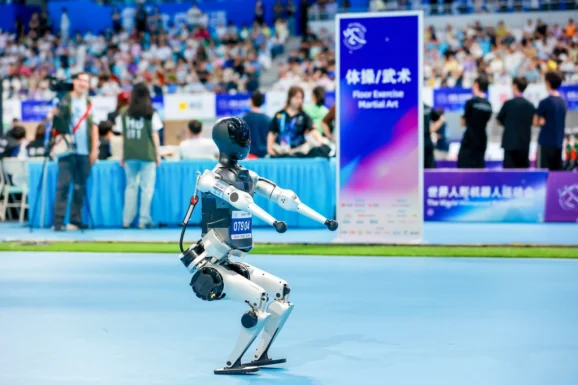
Another secured gold in the floor exercise after outscoring the rest of the field with a series of flips and tumbles.
A third entry partnered dancers from the Beijing Dance Academy in a traditional Yingge folk routine, claiming silver in the solo dance.
Organisers also staged the first fully autonomous five-a-side robot football match, presented as a milestone in the sport’s development.
The medal table was dominated by Beijing-backed teams, reflecting China’s growing role in robotics.
Officials stressed the Games were designed not only to test technology but also to encourage public engagement with machines that may soon move from research labs into homes and workplaces.
The closing ceremony included the launch of the World Humanoid Robotics Games Federation, which will set competition standards and promote international cooperation.
Zhou Changjiu, vice-chairman of the RoboCup International Federation, said the body would act as a milestone for the field, helping to establish rules on safety, performance and judging.
Organisers confirmed that the second Games will also be staged in Beijing in August 2026.
The event was co-organised by the Beijing municipal government, China Media Group and several robotics associations. Backers included the Beijing Sports Bureau, the Municipal Education Commission, Shougang Group and the Asia-Pacific RoboCup International Council.
The Games closed with the anthem Light Years as a glowing sphere, described as the “Intelligent Core”, was lowered from the rafters. The device had been illuminated at the opening ceremony and its retraction symbolised the end of the first Games and the start of preparations for the next.
Crowds leaving the Ice Ribbon called the spectacle a glimpse of the future. “This was breathtaking,” said one audience member. “It showed the possibilities of technological development. I look forward to the next one.”
Main photo: Noetix Robotics E1 participated in the 1500M running competition at the 2025 World Humanoid Robot Games. Photo: Noetix Robotics