With a highly skilled workforce, world-class infrastructure and one of Poland’s strongest regional economies, Pomerania is turning modest investments into major international operations. Tomasz Staniszewski explains why global businesses are choosing Poland’s Baltic coast as a base for long-term growth, and how Invest in Pomerania is supporting their expansion
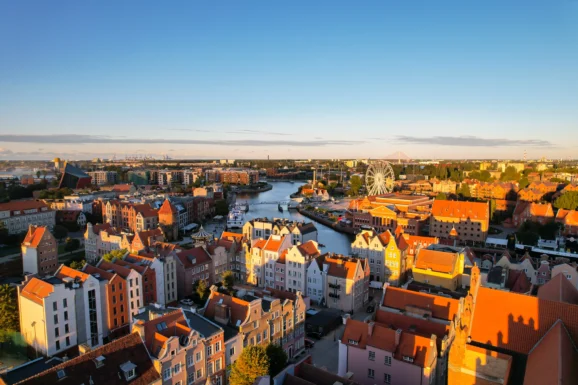
Pomerania is Poland’s northern coastal region, built around the Tricity of Gdańsk, Gdynia and Sopot on the Baltic Sea. Over the past two decades, it has quietly built a reputation among international investors as a place where an initial, modest investment tends to grow into something far larger and more strategic.
Between 2000 and 2023, the area recorded the second-highest GDP growth among all Polish regions, a sustained performance built on steady diversification rather than a single boom industry.
That momentum has not gone unnoticed internationally: in the fDi Intelligence and Financial Times ranking of Mid-Sized European Regions of the Future 2024/25, Pomerania placed third, a recognition reserved for regions offering the strongest combined outlook for foreign investors.
Much of that outlook rests on people. The region is home to 28 higher education institutions, producing a steady flow of graduates in engineering, IT, finance and business services, the disciplines underpinning the operations centres and technology hubs increasingly choosing Pomerania as their base. Connectivity reinforces the offer: Gdańsk Airport serves close to 90 flight destinations across around 30 countries, keeping the region well connected to its Western European partners.
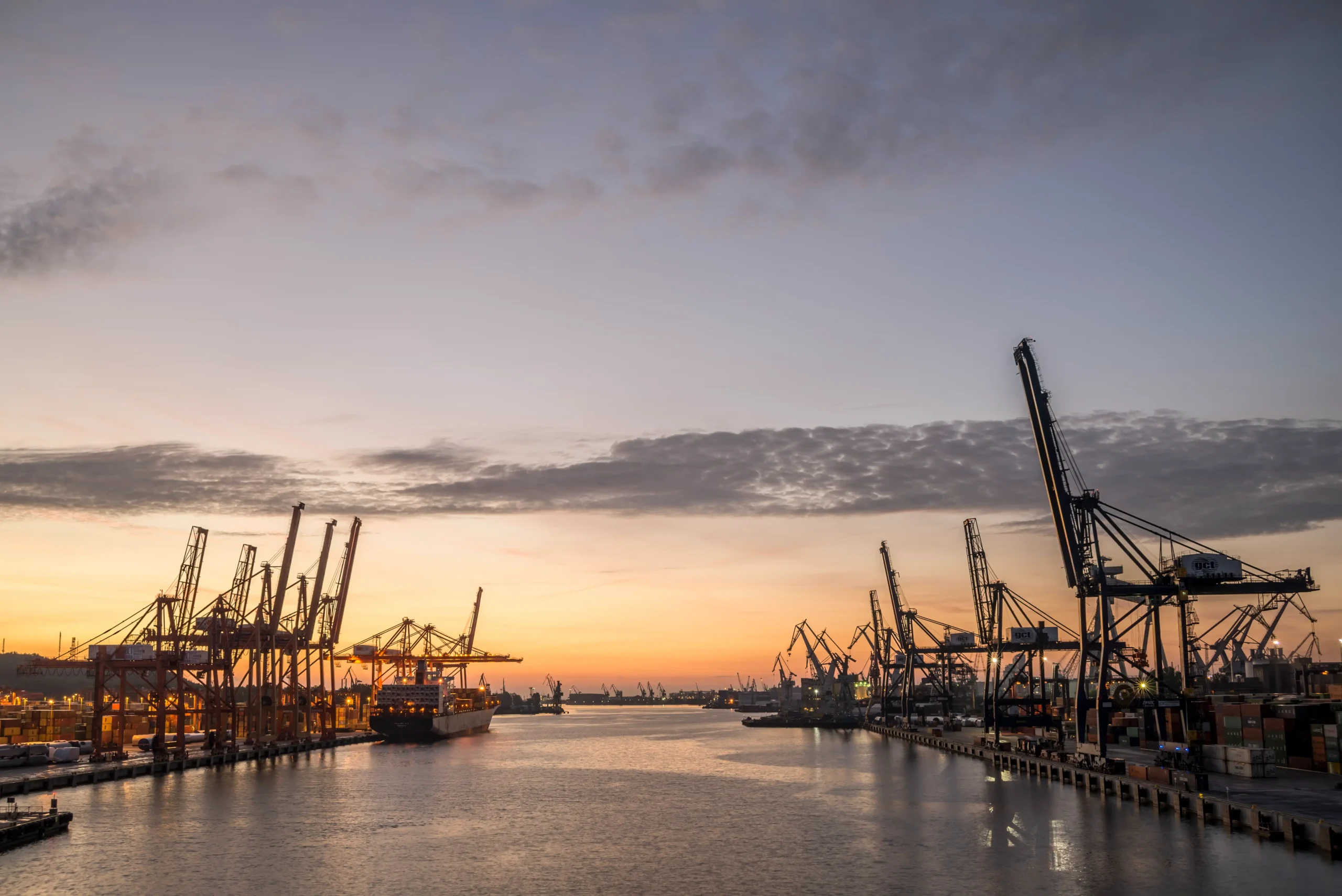
On the logistics side, the Port of Gdańsk is the largest container port on the Baltic Sea, a position that matters not only for manufacturers and logistics operators but for the broader business confidence that comes with visible, world-class infrastructure.
What does that potential look like on the ground? London Stock Exchange Group’s 20 years in Pomerania
Few examples illustrate it as clearly as London Stock Exchange Group’s (LSEG) operations in Gdynia. In 2006, a small group of analysts began working for what was then a local Reuters operation in the city. Two decades on, that site has grown into a strategic, multidisciplinary hub employing 1,250 people.
Its physical footprint has expanded in step with this growth, from a single floor to a modern, purpose-built office among the most contemporary business spaces in the Tricity, and the profile of the work has shifted just as significantly, moving from entry-level, largely manual processing roles towards senior, technical and analytical positions.
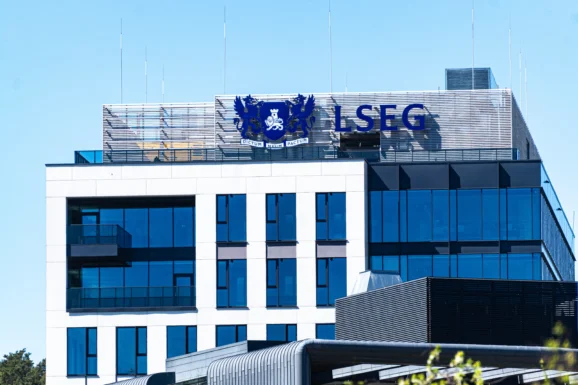
The original decision to open in the Tricity was shaped by an earlier acquisition that gave the company a foothold already established in the region. Two decades of continued reinvestment since then, LSEG says, come down to something harder to put a number on than infrastructure or cost.
“The Tricity is an attractive place for LSEG to grow, thanks to the high quality of education and the availability of talent here,” Agata Witczak, Member of the Management Board and Head of Country HR, EMEA at LSEG, explains.
“For more than 20 years, the company has consistently built a team of talented experts in this region. The high proportion of employees who choose to return to the organisation is further proof of the strength of our organisational culture, one built on inclusivity, respect, opportunities for development and a strong sense of community.”
That strength of culture has underpinned a steady expansion in the services delivered by employees based in Gdynia.
Nuno Rodrigues Campos, Site Lead for LSEG in Gdynia and Director of Non-Financial Risk, adds: “Gdynia is today one of LSEG’s key sites globally, supporting a significant share of our global services.
“Over the years, this location has grown from an operational centre into a strategic hub bringing together expertise in data, technology, products, sales, risk and operations. In recent years, further strategic functions have been moved to Gdynia, including a sales hub supporting Europe, the Middle East and Africa, as well as roles focused on developing and managing data-driven products.”
The organisation coordinating Pomerania’s investment ecosystem
LSEG’s growth in Gdynia is one story of what Pomerania’s underlying strengths – talent, connectivity and infrastructure among them – can produce over time.
But turning those same strengths into new jobs for other companies does not happen on its own. That is the specific role played by Invest in Pomerania, an initiative coordinated by the Pomeranian Development Agency (Agencja Rozwoju Pomorza S.A.), which connects international companies with the region’s talent, infrastructure and business ecosystem, and guides them through the practicalities of setting up or expanding operations here.
The results speak for themselves. Since the initiative began, Invest in Pomerania has helped complete 232 investment projects, including expansions by companies already established in the region.
Collectively, this support has contributed to the declared creation of more than 25,000 new jobs. Among the most significant projects delivered in recent years are investments by Scania, Foundever, Leman, Ferchau, HedgeServ, SK Hynix, MEP Solutions and Openchip, a list spanning automotive engineering, business process outsourcing, semiconductor design and technology services, illustrating the breadth of sectors now choosing Pomerania as a place to grow.
That same pattern, a modest step growing into something larger, is what Invest in Pomerania now works to repeat across the region, drawing on Pomerania’s academic strength, connectivity, port capacity and sustained economic growth to attract investment that stays and grows for decades to come.

Tomasz Staniszewski is a marketing specialist at Invest in Pomerania, an initiative coordinated by the Pomeranian Development Agency to help international companies establish and expand operations in the region. It connects investors with Pomerania’s talent, infrastructure and business network and has supported 232 investment projects, contributing to the declared creation of more than 25,000 jobs.
Further Information
Produced with support from Invest in Pomerania. Company data, figures and quotations in this article were provided by, or verified with, Invest in Pomerania, LSEG and the Pomeranian Development Agency. To find out more about investment opportunities in Pomerania and the support available to businesses establishing or expanding operations in the region, visit www.investinpomerania.pl/en
READ MORE: GigaCloud and Cubbit launch sovereign cloud storage for Ukraine and Poland. Partnership will distribute critical data across sites in Kyiv, Lviv and Warsaw to protect organisations from cyberattacks and physical disruption.
Do you have news to share or expertise to contribute? The European welcomes insights from business leaders and sector specialists. Get in touch with our editorial team to find out more.
Main image: The Port of Gdańsk is the largest container port on the Baltic Sea, underpinning Pomerania’s position as a logistics hub. (Supplied)