Forget cold water therapy – there’s an altogether more relaxing way to embrace the benefits of bathing…without water of any kind, finds travel writer and author, Emma Strandberg
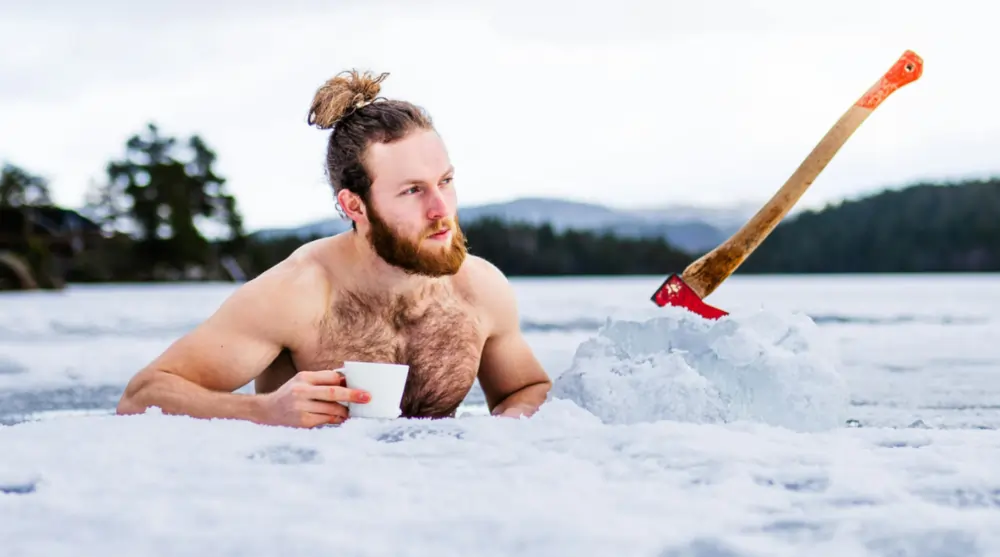
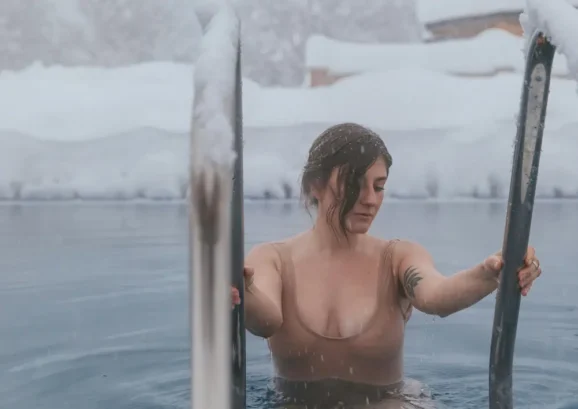
Thanks to the Dutch motivational speaker, Wim Hof, ice baths have long been the wellness trend for those seeking fat loss, balancing hormones, elevating mood, and bolstering the immune system.
But if the very idea of plunging into freezing ice sends shivers down your spine, you might consider an all-together more gentle form of ecotherapy.
I stumbled upon shinrin-yoku, the Japanese practice of forest bathing, a few years ago. The term emerged in the 1980s and its purpose is two-fold: to offer an eco-antidote to the stresses and strains of daily life, and to reconnect with nature.
While Japan is credited with the term shinrin-yoku, the concept is now practised globally. And it’s not only for wilderness lovers and Bear Grylls types; it can be as simple as immersing yourself in any natural environment and connecting with what’s around you – of seeing the wood through the trees.
If it all sounds a bit too ‘alternative’ – like tree hugging – believe me, it’s not. And what’s more, it works.
My passion for shinrin-yoku was born out of a series of particularly challenging life events. I knew that stress and my fast-paced lifestyle was slowly killing me and that I needed help, and fast.
Intending to find a cure, I explored a range of holistic and mainstream therapies including acupuncture, binaural beating, long-distance running and regular bouts of colonic irrigation.
None worked.
My way back to positive health saw me spend six months alone in wintertime in the far north of Iceland. I wrote a book – Where the f**k is Blönduós?: Driving and surviving a winter in Iceland. And it was there where I attempted to follow the Wim Hof Method (WHM), challenging myself in the country’s icy pools and lagoons. For me, WHM was simply too extreme. I was looking for equilibrium rather than an even greater surge of adrenaline. The WHM Method left me hyperventilating and fearful of drowning.
A friend introduced me to shinrin-yoku (forest bathing), and it changed everything. Surrounded by Iceland’s majestic mountains, lava fields, cliffs, and rivers, I felt calm, revitalised, and focused. For six months, I hiked to geothermal springs, often at night, soaking in their warmth while focusing on my breath. The serenity of these moments was a stark contrast to the adrenaline and fear I had experienced with the WHM.
My exploration extended to Iceland’s east coast, where I wandered through remote villages, lakes, valleys, and surreal lava fields. The landscapes varied dramatically – from rugged black terrain to moss-covered hillocks – and their isolation offered introspection. Days without signs of humanity deepened my connection to the region’s geological history.
On the west coast, the rocky peaks, remote beaches, and salt-laden air further cleansed the urban grime I carried with me. Standing on the peninsula, facing the sea, I felt a profound sense of being alive: a stark reminder of life’s fragility after a near-miss in Iceland’s unpredictable weather. While immersion in nature is transformative, I learned the importance of preparation and safety.
Even in winter, I navigated Iceland’s trails, waded through icy rivers, and climbed stunning gorges to panoramic viewpoints. Each journey tested my resilience, physically and mentally. Despite never being one for meditation or mindfulness, I found strength in the steady rhythm of traversing Iceland’s rugged terrain. Each step was a triumph, awakening me to the power of perseverance and connection with the natural world.
The ritual of forest bathing, even in a land without trees, gave me a positive inner calm and a more focused mind. It allowed me to cultivate a lasting pattern of behaviour that I now embrace daily in and around my home in Sweden.
Shinrin-yoku isn’t about exercising in the great outdoors – or freezing in it, either. It is simply being in nature. Nothing could be simpler or more natural.
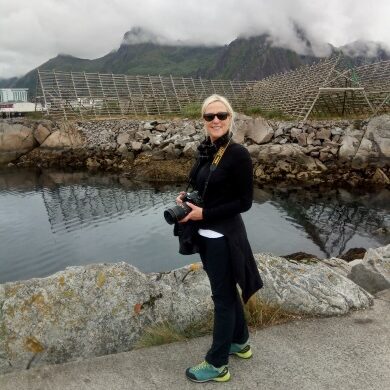
Emma Strandberg is an acclaimed travel writer and photographer who lives on the rugged west coast of Sweden. Her wildly popular books have been described as “authentic” and “gripping” by the Daily Express, and as a “triumph of travel writing” by The Sun.
Images courtesy Yaroslav Shuraev/Till Daling/Pexels