NASA takes possession of Orion capsule set to pave way for first Moon landing in 50 years

John E. Kaye
- Published
- News
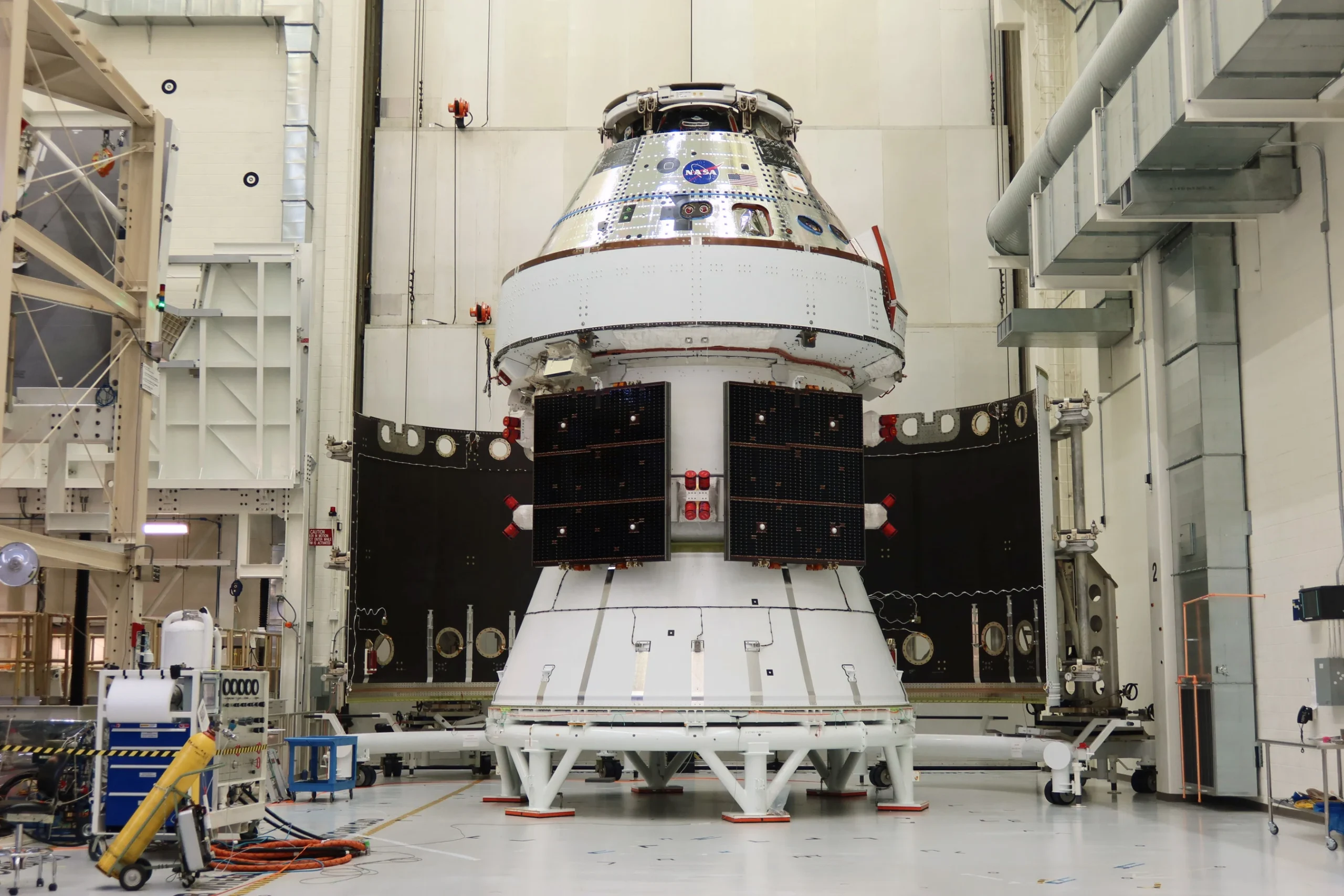
NASA has taken possession of the Orion spacecraft that will fly astronauts on the Artemis II mission — a critical test flight that will pave the way for the first human landing on the Moon in more than half a century
The Artemis II mission, scheduled for launch in early 2026, will send a crew of four on a ten-day journey beyond the Moon and back.
Although it will not enter lunar orbit or land, the flight is intended to validate key systems needed for future deep-space missions and marks the final step before a return to the Moon’s surface with Artemis III.
The spacecraft was formally handed over on 1 May 2025 at NASA’s Kennedy Space Center in Florida, following final assembly and testing by Lockheed Martin.
It will now undergo final processing ahead of integration with the agency’s Space Launch System (SLS) rocket.
Described by Lockheed Martin as the most advanced human-rated deep space spacecraft ever developed, Orion includes the crew module, crew module adaptor and launch abort system.
The company is NASA’s prime contractor for the capsule.
Kirk Shireman, its vice president of Human Space Exploration and Orion programme manager, said: “This achievement is a testament to our employees and suppliers who have worked tirelessly to get us to this important milestone.
“The Orion spacecraft completion for Artemis II is a major step forward in our nation’s efforts to develop a long-term lunar presence.
“It’s exciting to think that soon, humans will see the Earth rise over the lunar horizon from our vehicle, while also travelling farther from Earth than ever before.”
Artemis II will be Orion’s first crewed flight, following two uncrewed test missions: EFT-1 and Artemis I.
For the upcoming flight, the spacecraft has been upgraded with new life-support systems including thermal control, waste management, audio communications, and an exercise machine.
It also carries a fully functional launch abort system, an experimental laser communications unit, and docking sensors for future use.
The crew — NASA astronauts Reid Wiseman, Victor Glover and Christina Koch, along with Canadian astronaut Jeremy Hansen — will assess the capsule’s systems and conduct scientific experiments.
The mission includes a close rendezvous with the rocket’s upper stage, rehearsing docking manoeuvres needed for future landings.
NASA has stated that Artemis III — the follow-up mission — will attempt the first crewed Moon landing since Apollo 17 in 1972.
Lockheed Martin is currently building additional Orion capsules for Artemis III and IV and holds a contract with NASA to supply spacecraft through to Artemis VIII.
Main image: The finished Orion spacecraft for the Artemis II mission was officially handed over to NASA for launch processing on May 1, 2025 for a crewed mission to the Moon early next year. (Credit: Lockheed Martin)
TOP STORIES
-
 Route 66 turns 100 next month – and there’s never been a better excuse for Europeans to hit the road
 -
Serbia erupts in celebration as student protesters end Vučić’s 14-year grip on power
-
Two killed as Storm Boelo batters Britain with 85mph winds and leaves 90,000 homes without power
-
Man arrested on suspicion of arson after fire destroys Hitler’s Eagle’s Nest retreat
-
Britain faces higher winter energy prices as reliance on European electricity imports grows
-
Andy Burnham to make special Gogglebox appearance for Stand Up To Cancer
-
WPSL Golf targets £120 million valuation as billionaire-backed corporate deals and other commercial deals drive explosive global growth
-
Hackers could bring Britain’s essential services to a standstill, security chief warns after global website shutdowns
-
We're talking to almost twice as many people on the phone as a decade ago, study finds
-
TalkTalk sells majority stake in Telecom Acquisitions as founder Nigel Barnett regains control
-
Company closures soar ahead of tax rises as new Budget looms
-
An Italian affair – Stanley Johnson takes London’s society set on the Silk Road
-
Himalayan mountainside moved 40cm before avalanche killed 1,451 in Nepal, scientists reveal
-
Scientists and engineers quitting jobs as AI changes roles ‘beyond recognition’, study finds
-
UK profit warnings hit near two-year high as businesses struggle with rising costs
-
Microsoft pulls out of major UK AI data centre project amid power grid delays
-
Russia takes control of more European corporate assets amid Ukraine tensions
-
EU leaders resist calls to delay carbon rules as energy costs soar
-
‘A big step forward’ – PM Andy Burnham hails plans for Great British Railways HQ in Derby
-
UK economy grows just 0.1 per cent as construction falls and services stall
-
Germany risks losing €155bn a year under tighter AI data rules, new study warns
-
Pope Leo XIV diagnosed with lung cancer after surgery in Rome
-
France faces freezer meltdown as hackers strike supermarket chains
-
Bumble shares soar 50% amid $1bn takeover talks
-
China slump drives Volkswagen to sharpest quarterly fall in more than four years