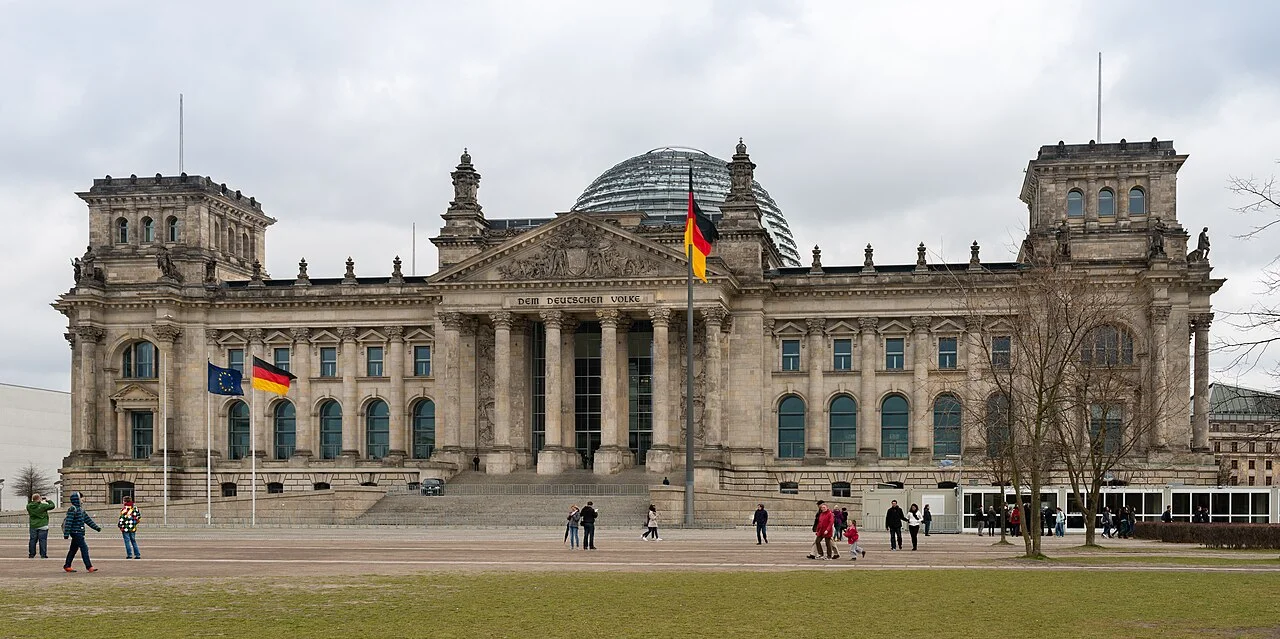
Germany remains the most visited destination for European business travellers, according to BCD Travel’s latest Cities & Trends Europe 2025 report
Based on 2024 flight and car rental data, the report offers a snapshot of corporate travel across the continent — and shows how established routes, city hubs, and even travel preferences are holding steady, despite global uncertainties.
The rankings reflect a largely unchanged picture in both city and country standings. Amsterdam came out on top among European cities, with London and Frankfurt following closely behind. Stockholm was the only city to shift position, nudging Brussels down one place to tenth. BCD attributes the overall growth in Western European business travel to increased activity in real estate, followed by the arts, entertainment, and recreation sector.
Travel beyond Europe paints a similar picture of consistency. The United States dominates the list of most visited intercontinental cities, claiming eight of the top ten spots. New York City, Chicago and Dubai make up the top three.
According to Michèle Lawley, pictured, BCD’s regional president of Europe, these figures represent a broader economic mood. “Although the geopolitical landscape will remain subject to rapid change and complexity, posing concerns for travellers and their companies, the global economy has delivered upside surprises in 2024,” she said. “Global business travel growth over the past year surpassed expectations, paving the way for continued momentum in 2025.”
Germany continues to lead among countries in Europe, followed by the UK, the Netherlands, and France. Italy, meanwhile, recorded the most significant rise in inbound business travel. The country’s economic recovery, especially in the second half of the year, helped build business confidence. Airlines also expanded operations across Italy, adding flights and increasing the number of destinations served — a likely contributor to its climb in the rankings.
Further afield, the United States held its place as the top intercontinental destination for European business travellers, followed by the UAE and India. China showed signs of a strong rebound, which BCD attributes to loosened travel restrictions, renewed economic activity, and state initiatives designed to encourage international movement.
London remains the continent’s busiest hub, dominating both intra-European and intercontinental flight routes. Eight of the top ten European city pairs either depart from or arrive in London, with Amsterdam–London and London–Amsterdam occupying the top two positions. The most travelled intercontinental route was London to New York City, followed by Frankfurt to Chicago and London to Los Angeles. U.S. cities also made up the majority of intercontinental arrival hubs, with New York once again taking the lead.
When it comes to how people are flying, economy class still reigns — at least within Europe. Around 92% of intra-European business travellers flew economy, with just 7% booking business class. On intercontinental routes, that figure levels out, with business and economy each accounting for 44%. Premium economy and first-class bookings remained minimal.
According to Olivier Benoit, pictured, senior vice president at BCD’s consultancy arm Advito, the preference for economy on shorter routes is about more than just policy. “The comfort difference between business and economy is often perceived as insignificant on short-haul flights and many business travellers benefit already from frequent flyer services like lounge access and priority boarding, even in economy,” he said.
From a cost-benefit perspective, that difference matters. “For travel managers, the return on investment is much higher on economy tickets,” Benoit added. “They’re often half the price of business fares, and 70% of these flights are less than two hours. On such short flights, a traveller’s productivity level won’t differ much between economy and business class.”
Most European business travel still relies on direct flights, with 85% of trips involving no layovers — a reflection of both the continent’s geography and strong point-to-point demand. But intercontinental travel from Europe tells a different story. Just over half (52%) of these flights are direct, as many carriers continue to rely on hub-and-spoke models through cities such as London, Amsterdam and Frankfurt to maximise passenger loads on long-haul routes.
Car rental remains a common add-on for business trips. Around 21% of air bookings in Europe included a rental car, typically for an average of four days. Travellers cited convenience, time efficiency, lack of viable alternatives and cost as the main reasons for choosing cars over public transport or taxis.
For companies tracking travel trends to inform planning and budgets, the report provides a useful benchmark. BCD’s Cities & Trends series includes insights from the U.S. and Asia-Pacific as well, offering a comparative view of how business travel is evolving across regions. As Lawley noted, last year’s resilience in global travel points to cautious optimism going forward. “The momentum is there,” she said. “Now it’s about how companies harness it.”
Top 10 European Cities (2024)
1. Amsterdam
2. London
3. Frankfurt
4. Munich
5. Paris
6. Copenhagen
7. Zurich
8. Vienna
9. Stockholm
10. Brussels
Top 10 Intercontinental Cities (2024)
1. New York City
2. Chicago
3. Dubai
4. Washington, D.C.
5. San Francisco
6. Boston
7. Atlanta
8. Seattle-Tacoma
9. Shanghai
10. Los Angeles
Top 10 European Countries (2024)
1. Germany
2. United Kingdom
3. Netherlands
4. France
5. Italy
6. Spain
7. Switzerland
8. Denmark
9. Sweden
10. Austria
Top 10 Intercontinental Countries (2024)
1. United States
2. United Arab Emirates
3. India
4. China
5. Canada
6. Qatar
7. Singapore
8. Japan
9. Brazil
10. Morocco
Top 10 European Routes (2024)
1. Amsterdam – London
2. London – Amsterdam
3. Frankfurt – London
4. London – Dublin
5. London – Frankfurt
6. Dublin – London
7. Munich – London
8. London – Munich
9. Stockholm – Copenhagen
10. Copenhagen – Stockholm
Top 10 Intercontinental Routes (2024)
1. London – New York City
2. Frankfurt – Chicago
3. London – Los Angeles
4. Frankfurt – New York City
5. London – Chicago
6. London – Seattle-Tacoma
7. Frankfurt – Shanghai
8. Paris – New York City
9. Frankfurt – Washington, D.C.
10. Frankfurt – San Francisco


Main image (Cologne, Germany): Pixabay