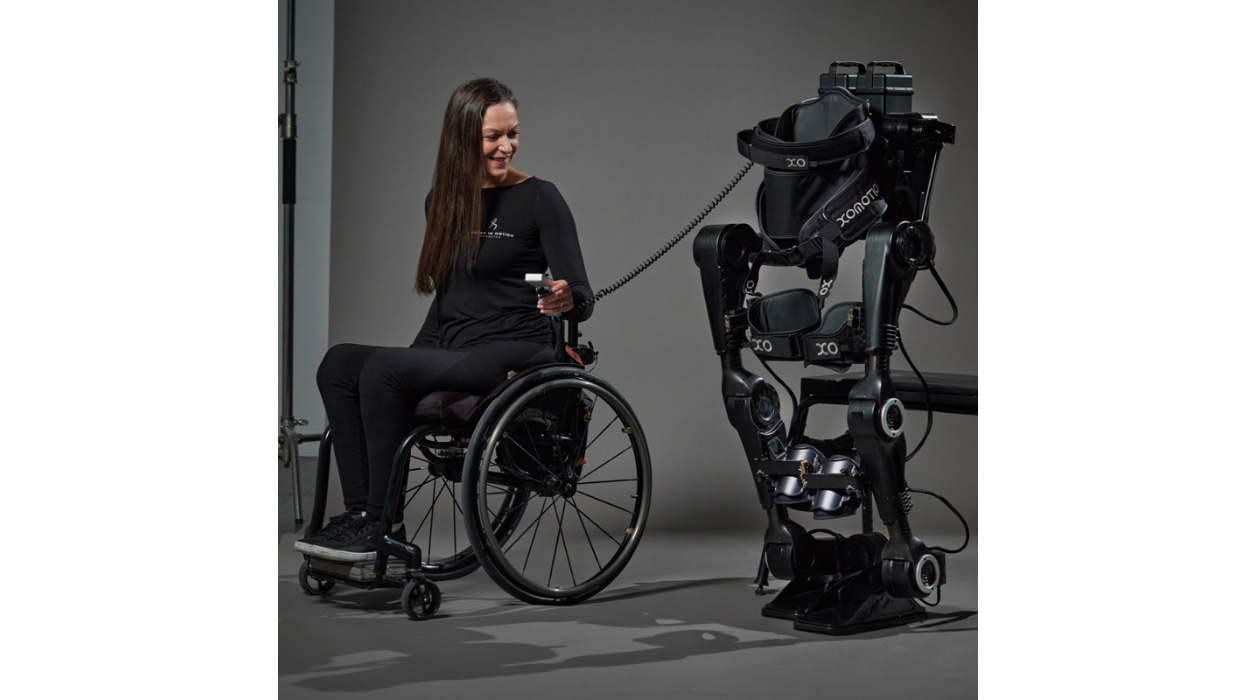
A groundbreaking exoskeleton allowed a paralyzed woman to walk onto the stage during this year’s Invictus Games, marking the end of a powerful and poignant week that saw Prince Harry moved to tears
Chloe Angus, who lost the use of her legs in 2015, demonstrated the high-tech $250,000 suit during the emotionally charged closing ceremony on Monday.
Angus, who is Canadian, was told she would never walk again after a tumour damaged the base of her spine.
But she teamed up with British Columbia’s Human in Motion Robotics to help design XoMotion.
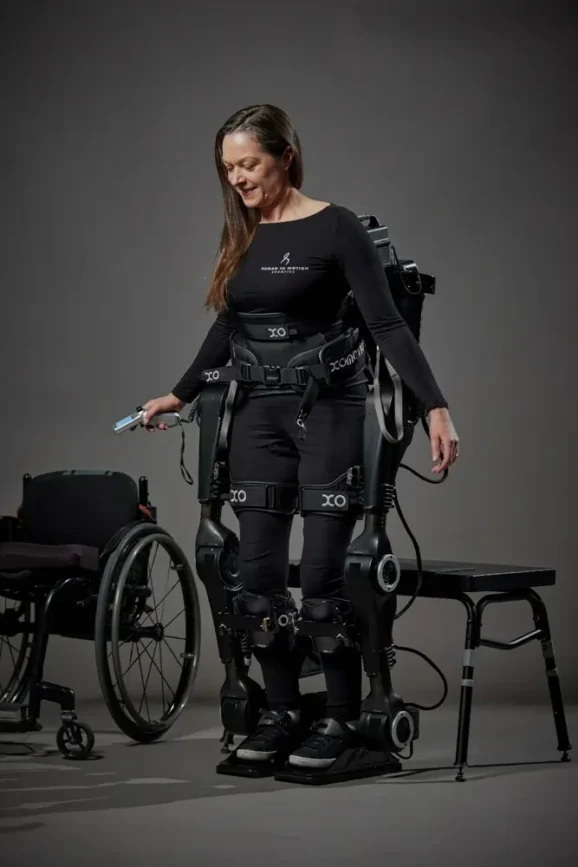
The exoskeleton uses motors to mimic natural human movement and balance.
This helps users to stand, walk forward and backward, sway their hips, and turn.
She has heralded it as the future for disabled people, saying that wheelchairs are “obsolete” and haven’t been updated for 250 years.
Angus, who is the firm’s Product Ambassador & Director of Lived Experience, showed off the device in front of 20,000 spectators in Vancouver.
She walked the Invictus flag onto the stage before it was handed over to UK Minister, Al Carns.
The MP accepted it on behalf of the British city of Birmingham where the games will be held in July 2027.
Speaking yesterday Siamak Arzanpour, of Human in Motion Robotics, said: “We are incredibly proud to have showcased XoMotion at the Invictus Games.
“Chloë’s demonstration highlighted the transformative power of this technology and the resilience of the human spirit.
We believe XoMotion has the potential to revolutionize mobility for countless individuals, and we are committed to making it accessible to those who need it.”
This year’s Games, which included winter sports for the first time, saw Prince Harry brought to tears as he was told he had changed the lives of so many people.
He visibly welled up after Canadian Premier Justin Trudeau spoke of the impact he had on so many injured military veterans and their families with his work and dedication.
The Duke of Sussex gave a thumbs up to the speech with tears in his eyes as 20,000 people at the ceremony gave him a standing ovation.
Images: Human in Motion Robotics Inc