‘Watershed Moment’ as UK passes self-driving car law

John E. Kaye
- Published
- Home, News, Technology
Self-driving vehicles could be on British roads by 2026 after the government’s “landmark” legal framework for autonomous vehicles gained royal assent on Monday
According to the UK’s Department for Transport (DfT), the Automated Vehicles (AV) Act will put “Great Britain at the forefront of self-driving regulation”.
It will also create 38,000 skilled jobs by 2035 and tap into an industry worth up to £42billion, it added.
Autonomous vehicles will still need to meet “rigorous” safety standards before being allowed onto roads.
This could cut the number of deaths and injuries caused by drink-driving, speeding, tiredness and inattention, the DfT added.
But the new law means that motorists will not be held responsible for the action of a vehicle in self-driving mode.
Instead, liability will fall on corporations such as insurance providers, software developers and automotive manufacturers.
The DfT said: “The act delivers the most comprehensive legal framework of its kind worldwide, setting out who is liable for AVs meaning that drivers can be assured that, while their vehicle is in self-driving mode, they will not be held responsible for how the vehicle drives.
“Companies will have ongoing obligations to keep their vehicles safe and ensure that they continue to drive in accordance with British laws.”
Trials of autonomous vehicle technology are already in place across the UK, such as by Wayve in London and Oxa in Oxford.
Earlier this month, Wayve secured more than $1 billion in investment to develop its UK-based AI technology.
The introduction of the AV Act will further bolster the UK’s position as a world leader in emerging industries, the DfT said.
It will also support industries impacted by human driver shortages, such as haulage, and will improve the lives of millions of Britons affected by immobility.
Mark Harper, the UK’s Transport Secretary, said: “Britain stands at the threshold of an automotive revolution and this new law is a milestone moment for our self-driving industry, which has the potential to change the way we travel forever.
“While this doesn’t take away people’s ability to choose to drive themselves, our landmark legislation means self-driving vehicles can be rolled out on British roads as soon as 2026, in a real boost to both safety and our economy.”
Mike Hawes, the chief executive of the Society of Motor Manufacturers and Traders, added: “This is a watershed moment for UK automotive innovation and road safety in the UK.
“Self-driving vehicles will revolutionise our society, and this new law will help turn ambition into reality, putting the UK alongside a handful of other global markets that already have their regulatory frameworks in place.
“The industry will continue its close collaboration with government and other stakeholders to develop the necessary secondary legislation that will enable the safe and responsible commercial rollout of self-driving vehicles and the significant social and economic benefits they will afford the UK.”
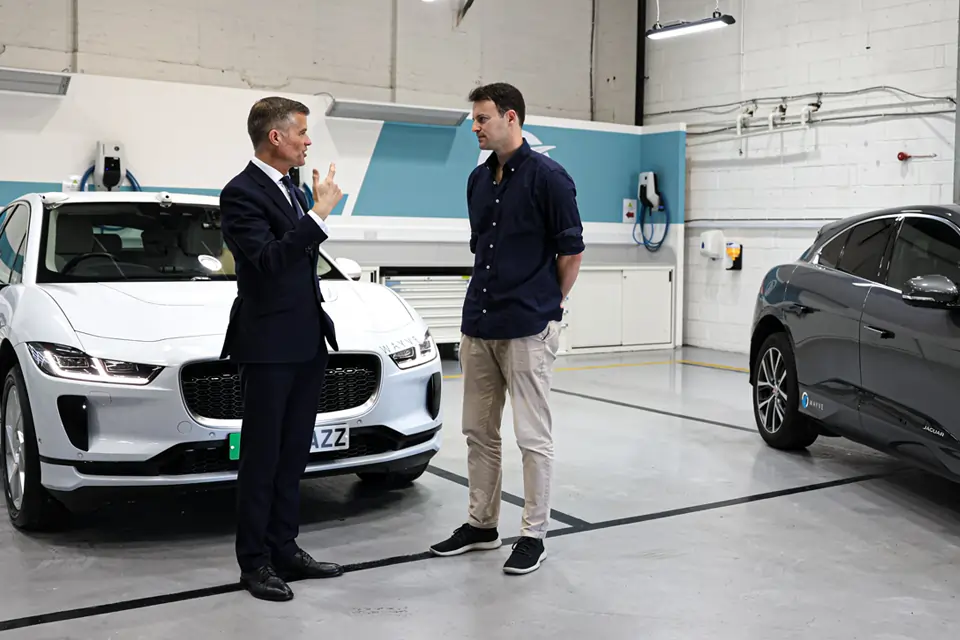
Main image: DfT, showing Transport Minister, Mark Harper
TOP STORIES
-
 Britain faces higher winter energy prices as reliance on European electricity imports grows
 -
Andy Burnham to make special Gogglebox appearance for Stand Up To Cancer
-
WPSL Golf targets £120 million valuation as billionaire-backed corporate deals and other commercial deals drive explosive global growth
-
Hackers could bring Britain’s essential services to a standstill, security chief warns after global website shutdowns
-
We're talking to almost twice as many people on the phone as a decade ago, study finds
-
TalkTalk sells majority stake in Telecom Acquisitions as founder Nigel Barnett regains control
-
Company closures soar ahead of tax rises as new Budget looms
-
Russia takes control of more European corporate assets amid Ukraine tensions
-
EU leaders resist calls to delay carbon rules as energy costs soar
-
‘A big step forward’ – PM Andy Burnham hails plans for Great British Railways HQ in Derby
-
UK economy grows just 0.1 per cent as construction falls and services stall
-
Germany risks losing €155bn a year under tighter AI data rules, new study warns
-
Pope Leo XIV diagnosed with lung cancer after surgery in Rome
-
France faces freezer meltdown as hackers strike supermarket chains
-
Bumble shares soar 50% amid $1bn takeover talks
-
China slump drives Volkswagen to sharpest quarterly fall in more than four years
-
Hollywood mega-powerhouse created as Paramount completes Warner Bros Discovery takeover
-
Gamers face gridlock as latest Grand Theft Auto download 'nears two days'
-
Samsung profits soar ninefold to record £61bn amid AI chip boom
-
New Springer books put the UN’s struggling sustainability goals to the real-world test
-
Europe’s solar boom set for two-year slowdown after record growth
-
Let it pea. Musicians turn vegetables into instruments at Beatles' Abbey Road studios
-
Golden naked Trump statue unveiled at European Parliament
-
Jaguar puts controversial rebrand on the road with £130K 1,030PS Type 01
-
Deepfakes and identity fraud drive new wave of post-hire background checks