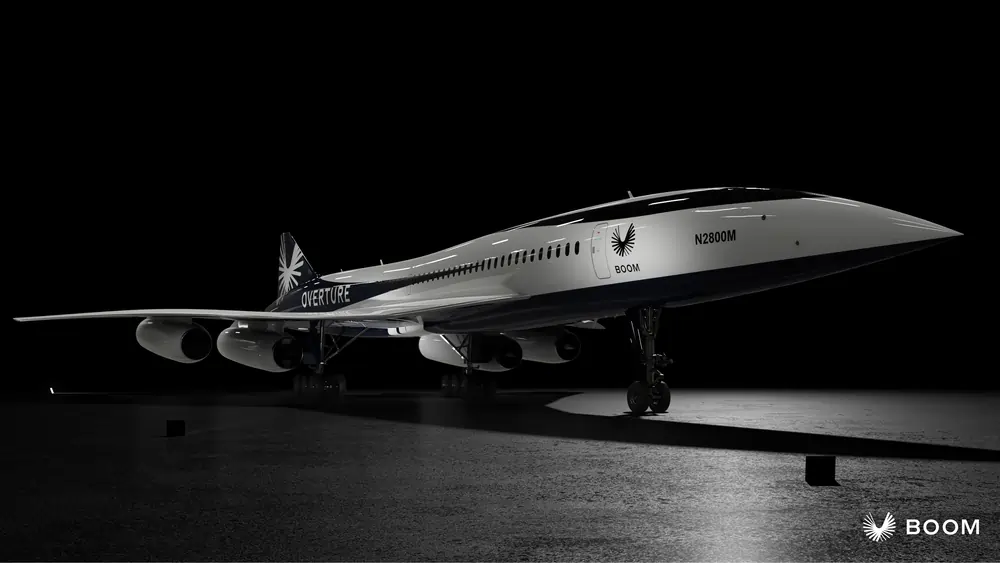
A plan to build the first supersonic passenger jet since Concorde has taken a significant leap forward following a successful test flight in the US desert.
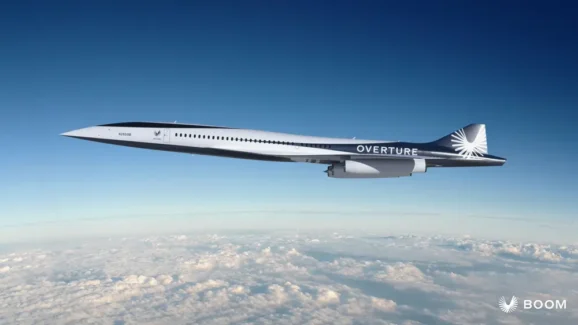
The Overture, which will fly between London and New York in just 3.5hours, could be in the skies by 2030 after last week’s “milestone” achievement.
A scaled-down prototype, nicknamed the ‘Baby Boom’, took off for the first time from the Mojave Air & Space Port and is said to have “met all of its test objectives”.
The demonstrator, officially called XB-1, reached an altitude of more than 7,000ft and a top speed of 246 knots (283 mph).
Its aerodynamics, carbon fibre shell, and technology – which includes a Minority Report-style augmented reality interface – also passed with flying colours.
The short, subsonic flight over the Mojave Desert came years later than expected and lasted just 12 minutes.
But it was key to the development of XB-1’s big brother, Overture, a Concorde-style airliner which will travel at twice the speed of conventional subsonic aircraft when it becomes operational.
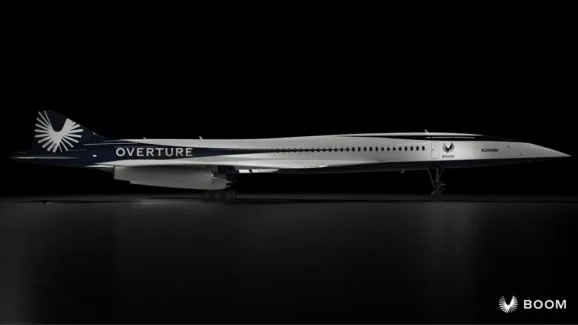
Boom Supersonic, the Colorado-based company behind Overture and XB-1, has hailed the test flight as a major stepping stone toward the return of supersonic air travel.
Blake Scholl, its founder and CEO, said: “I’ve been looking forward to this flight since founding Boom in 2014, and it marks the most significant milestone yet on our path to bring supersonic travel to passengers worldwide.”
Overture has been dubbed “son of Concorde” after the last supersonic passenger jet, which was grounded by a combination of high oil prices, low demand and concerns about safety following the 2000 crash in Paris in which 113 people died.
Concorde’s final journey took place in 2003 following a transatlantic crossing between New York JFK and London Heathrow.
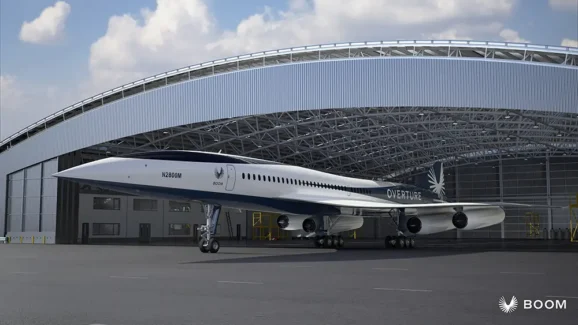
The Overture will fly at Mach 1.7, or roughly 1,050mph, which is one-sixth slower than Concorde but still twice the speed of conventional subsonic aircraft.
This would reduce journey times between London and New York from six and a half hours to three and a half hours.
A flight between London and Miami would also be cut from about nine and a half hours to less than five.
With a range of 4,888 miles and a capacity for 80 passengers, Boom Supersonic says there are potentially more than 600 “profitable routes” for the Overture.
Regulations against sonic booms means those routes would mostly be over water, which is where Overture would be able to break the sound barrier and fly at full throttle.
Journeys from coastal US cities like New York, Washington DC, Miami and Seattle to Tokyo, London, Paris and other European cities are therefore likely to comprise the key market.
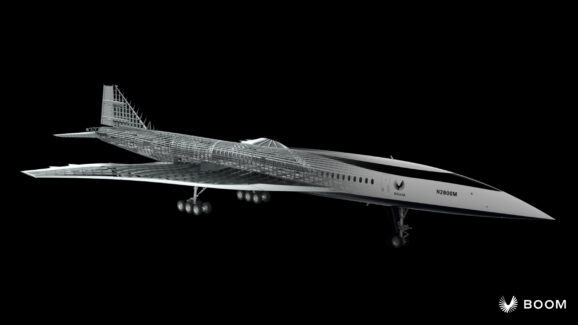
Boom Supersonic has 130 orders and commitments for its planes already, including deals with United, American Airlines and Japan Airlines, and has set a target for Overture to take its first flight by the end of this decade.
Overture’s 1/3-scale prototype, the XB-1, took her maiden flight in the airspace above Air & Space Port last Thursday.
The site was previously used to test the SR-71 Blackbird, the fastest air-breathing aircraft ever made, and the Bell X-1, the first aeroplane to break the sound barrier.
Test pilot Bill “Doc” Shoemaker said: “Everyone on the XB-1 team should be incredibly proud of this achievement.
“”It has been a privilege to share this journey with so many dedicated and talented professionals. The experience we have gained in reaching this milestone will be invaluable to Boom’s revival of supersonic travel.”
Further information
boomsupersonic.com